
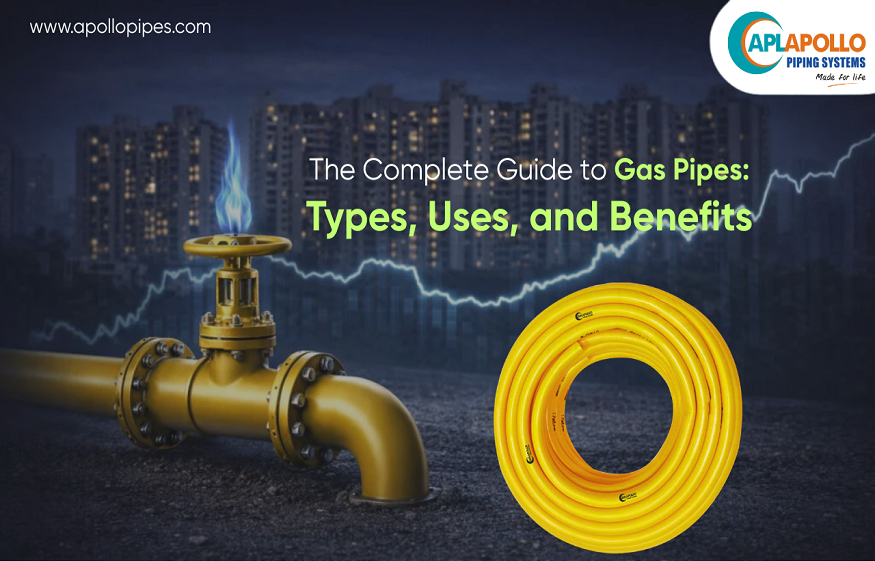

Gas pipes are important components for safe and efficient gas transport in households, industries and commercial sectors. Some important applications of gas pipe include cooking gas supply to households, gas distribution in industries and energy supply in large scale. To prevent leakage and enhance durability, selecting more appropriate gas pipe has become increasingly important.
What Are Gas Pipes?
Gas pipes are specialised piping systems which are designed to transport gases such as natural gas, LPG (Liquefied Petroleum Gas), industrial gases from a source to another point of use. These are made of pressure-resistant material, designed to withstand temperature and environmental changes. Gas pipes are used in houses, offices, factories and gas distribution system. Most gas pipes are manufactured using modern technology that has improved strength, flexibility and corrosion resistance.
Read More : The Rise of Statement Surfaces in Modern Homes
Types of Gas Pipes
-
CPVC and PVC Gas Pipes
CPVC and PVC materials are lightweight and corrosion-resistant materials. These are usually used in some gas-related applications. Thesecan be easily installed and are low in maintenance compared to conventional materials.
-
HDPE Gas Pipes
HDPE or High-Density Polyethylene pipes are mostly used in underground gas distribution systems for their durability, flexibility and chemical resistance. Thus, these are best for outdoor applications because of their ability to withstand soil pressure and environmental changes.
-
Steel Gas Pipes
Due to the high strength and high-pressure resistance of steel, steel pipes have been widely used to industrial and commercial gas supplies. These are suitable for large streams of gases and need to be coated and maintained to avoid corrosion.
-
Copper Gas Pipes
Copper pipes are often used in domestic gas supplies. These are very durable, heat resistant and reliable. Their smooth internal surfaces maintain efficient gas flow.
Uses of Gas Pipes
-
Residential
Gas pipelines are used in residential applications to provide LPG or natural gas to cooking appliances, water heaters and heating systems. These gas piping provides a solid and safe flow of fuel.
-
Commercial
Hotels and restaurants rely on reliable gas pipe systems for cooking and heating. High quality gas pipes are long-lasting and allow high usage while maintaining safety.
-
Industrial
Industries use gas pipes to transport fuel and gases which are used in manufacturing, heating and machinery operation. Industrial gas systems are designed for high pressure and tough conditions.
-
Underground Gas Distribution
HDPE gas pipes are used for underground networks and for this, these need to be flexible and resist damage from the surrounding environment. This reduces risk in long-range transportation.
Benefits of Using Quality Gas Pipes
-
Improved Safety
Improved safety is the major advantage of high-end gas pipes, because sturdy and leak-tight pipes can reduce the probability of gas leakage and avoid dangerous situations.
-
Long Lifespan
Advanced materials of modern gas pipes provide better resistance to environmental factors, corrosion and pressure and thus enhance the lifespan of the piping system and reduce costs of replacement.
-
Convenient Installation
Now-a-days, gas pipes are manufactured to be lightweight and it is easy to handle and install them.The flexible designs also lower the requirement of complex fittings.
-
Higher Performance
Good quality gas pipes provide higher performance. These pipes not only make gas flow smoothly, but also maintain the same pressure.
-
Low Maintenance
New gas piping materials need little maintenance compared to conventional gas pipes. Their strength and durability help to ensure reliable performance for years to come.
Choosing the Right Gas Pipes
The right choice of gas pipe depends on many factors: the application, the type of gas, the pressure, the installation point and safety rules and regulations. In some cases, residential gas pipes might be different from industrial gas network pipe. Select pipes that meet safety standards as these are symbol of reliability.
APL Apollo’s Gas Pipes
APL Apollo is a reputable manufacturer of Gas pipes. These Medium-Density Polyethylene (MDPE) and High-Density Polyethylene (HDPE) piping systems have transformed the gas industry due to its high performance and long operating life. Extensively used for both industrial and residential application, the MDPE and HDPE pipes have become the best choice in safe gas transport.
Read More : Pilgrims of Hope in the Heart of Your Home
These gas pipes have proven their remarkable performance for transporting natural gas, PNG, propane, LPG and biogas. These are lightweight, long-lasting and corrosion resistant. Sometimes these gas pipes even last for more than a century.
Most of the modern gas transporting pipes are made of plastic and polyethylene materials. APL Apollo’s polyethylene gas pipes are designed and manufactured to be the safest and most economical solution for piped gas distribution systems for construction. APL MDPE and HDPE gas piping system is widely used in domestic and industrial piping for leak-proof, durable, homogeneous and corrosion resistant conditions.



Leave a Reply
You must be logged in to post a comment.
[…] Read More: The Complete Guide to Gas Pipes: Types, Uses and Benefits […]